

Empowering All Learners
- By Christine Hopkinson
- Jul 2, 2025
Leveraging Active Mathematics Learning for Students with Disabilities
Introduction
In today's diverse classrooms, mathematics instruction must be inclusive, equitable, and accessible. Recognizing this imperative, the National Council of Teachers of Mathematics (NCTM) and the Council for Exceptional Children (CEC) have issued a powerful joint position statement. It champions the rights of students with disabilities to receive high-quality, grade-level mathematics instruction, backed by collaborative, research-based teaching strategies.
This blog unpacks the key declarations, guiding principles, and actionable recommendations from this critical document. It also highlights ways Didax’ vision aligns and how our products can support educators in this critical mission.
Summary of Declarations: What Every Student Deserves
- Access to Grade-Level Content: Students with disabilities are entitled to participate in and progress through the same standards as their peers. Often, we find that students are not given the opportunity to experience rigorous content, or they do not experience the full scope sequence of grade level content due to time spent in off-level interventions. This results in more “holes” in foundational content, leaving them further behind.
- High-Quality Instruction: Learning must be aligned with content standards, current teaching methods, and appropriate scaffolds. Acceleration methods and interventions should have the goal of students attaining grade level as soon as possible. It is critical that the core and intervention content, models, and language students experience is coherent. Accessibility should be increased via multiple representations, discourse, and problem-solving strategies.
- Educators Who Believe in Them: Positive expectations and asset-based teaching foster achievement and confidence. “Students with disabilities benefit from asset-based learning environments where they are recognized and positioned as capable and competent mathematics learners (Cooper & Farkas, 2022; Steele & Honey, 2024). Educators’ beliefs and expectations about students influence their instructional decisions (NCTM, 2014) and student learning outcomes (Busaad, 2020; Cameron & Cook, 2013; Hattie, 2023).” Students also must be given opportunities to develop their math identities and confidence by participating in a diverse, affirming community with their peers.
Declarations into Action: Making Math Meaningful for Every Learner
- Ensuring Equitable Access
Grade-level content must not be withheld based on assumptions about student capabilities. Everyone should have equal access to rigorous on-level lessons, experiences, materials, interactions, and discussions.
Accelerate, rather than remediate, foundational content students have not mastered before grade-level instruction. For example, prepare targeted, small group mini lessons on place value concepts prior to teaching multi-digit operations (for students who need it, based on assessment data).
Tiered support (MTSS) interventions should supplement but not replace core grade-level instruction. They should align with the core program as well as include systematic, explicit instruction, and frequent progress monitoring.
Use Universal Design for Learning (UDL) to guide the design of flexible learning environments to accommodate individual learning differences. When applied to math instruction for students with disabilities, UDL strategies aim to remove barriers and support multiple means of engagement, representation, and expression.
Multiple Means of Representation (The "What" of Learning) - Provide information in different formats so all learners can access it.
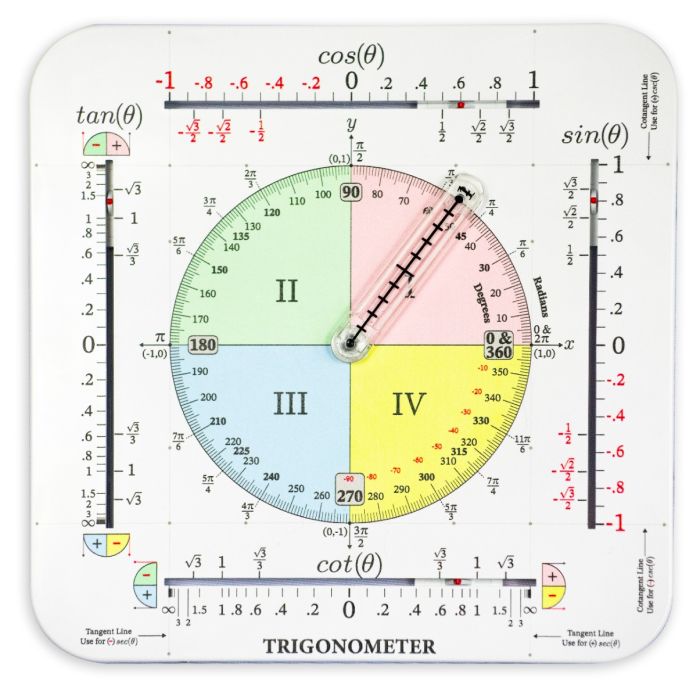
- Visual supports: Use diagrams, number lines, anchor charts, color coding, etc.
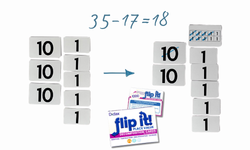
- Concrete-Pictorial-Symbolic Progression: To build conceptual understanding, introduce new concepts with hands-on manipulatives, connect to pictorial representations, and then to symbols/equations.
- Math vocabulary support: Use anchor charts, glossaries, graphic organizers, and visual word walls.
- Digital tools: Interactive math software such as Didax’s Virtual Manipulatives.
- Audio supports: Read aloud or use text-to-speech for word problems.
- Encourage students to share and respond to various solution paths. Celebrate and utilize flexible thinking.
Multiple Means of Action and Expression (The "How" of Learning) - Allow students to demonstrate what they know in various ways.
- Choice in assessment formats: Oral explanation, drawing models, using tech-based tools like screencasts or digital whiteboards.
- Scaffolded problem solving: Provide manipulatives such as counters or templates such as tape diagrams or number bonds.
- Whiteboards: Allow students to explain reasoning in words or pictures.
- Use of calculators as appropriate.
Multiple Means of Engagement (The "Why" of Learning) - Motivate students and maintain interest by offering choices and relevance.
- Real-life applications: Connect math problems and concepts to students’ lives or interests (e.g., sports stats, cooking, money).
- Spaced Practice: Provide engaging ways for students to practice new skills over time, such as math games.
- Collaborative learning: Pair work, peer tutoring, vertical learning, or group projects.
- Choice and autonomy: Let students pick problem sets, tools, or methods of learning.
- Regular feedback and check-ins: Helps students monitor their own progress and celebrate every success! Growth is the goal.
- Delivering High-Quality, Targeted Instruction
- Utilize high-quality core curriculum and supplemental resources.
- Develop mathematical content knowledge and pedagogical skill. Check out our Manipulative Professional Development and Working With … book series.
- Employ effective and engaging instructional strategies and routines, foster an inclusive classroom community, and facilitate thinking through discourse.
- Emphasize co-teaching and collaborative planning to merge expertise from general and special educators.
- Flexible pacing and extended time.
- Use flexible grouping structures to cultivate a community of learning.
- Break down tasks into smaller, manageable steps.
- Individualized supports as described in the IEP (Individualized Education Plan)
- Fostering Belief in Students’ Abilities
- Create asset-based environments that position students as competent learners. Develop new learning from what students already know.
- Cultivate positive math identities by connecting learning to real-world experiences and student backgrounds.
- Use inclusive discourse and varied representations to reflect diverse perspectives and boost self-efficacy.
- Promote a math growth mindset, use mistakes as opportunities to learn, communicate that learning takes time and is different for everyone, and finally - affirm that everyone is a “math person”!
Turning Vision into Action: Didax, Your Active Learning Partner
Didax is a leading provider of high-quality math manipulatives, publisher kits, and supplemental curriculum. We are committed to providing educators with engaging resources to inspire active learning and foster creativity. We’re all about math for EVERY child. We deliver solutions that make math teaching and learning more concrete, active, and effective. Our products help students PreK-12 master essential math concepts and operations from basic arithmetic to advanced algebra and geometry. Our physical (and digital) manipulatives and resources ensure math is easier to teach and more fun to learn:
- Concrete and visual tools to make abstract math accessible
- Manipulatives to develop and show understanding
- Hands-on, playful materials to foster motivation and curiosity
- Supplemental resources to differentiate, intervene, and accelerate
- Teacher resources to empower content knowledge and expedite planning
Didax believes in supporting educators, students with disabilities, and their families. We are happy to help you find just the right resources to ensure math success and joy, reach out!
Rewriting the Math Narrative for Every Student
Mathematics is not just about numbers—it's about equity, empowerment, and opportunity. Every student, regardless of ability, deserves to see themselves as a mathematical thinker and problem solver. By working together, educators, leaders, and content/product creators - we can transform classrooms into places where all learners thrive. It’s time to believe in every student’s potential—and teach like we do.




 © 2025 Didax, Inc. All Rights Reserved.