
FREE shipping on Web Order over $99 - Click for Details

Math

Class Ideas: The Didax Blog

Check It Out!

Need new ideas? Looking for quick tips for teaching tricky concepts or organizing your math centers? Class Ideas is your go-to spot for inspiration, information and innovation and it’s an ideal way to stay current with the latest trends in math teaching and learning.

Share Your Ideas with Us

If there are topics you’d like us to cover or you’d be interested in being a guest contributor, reach out to us and we’ll respond. Email us at hello@didax.com

Categories

Raising Mathematicians

Raising Mathematicians 

By Nancy Pollack


What does it mean to raise a mathematician? 

For many families, preparing a young child for school naturally brings reading, books, and ABCs to mind. But mathematics deserves just as much attention, and building a strong mathematical foundation doesn’t have to mean worksheets, flashcards, or formal lessons. 

In this post, Nancy Pollack shares her experience helping families see the mathematics already woven into their children’s everyday lives. From counting and comparing to noticing shapes and talking about numbers, simple conversations and playful experiences can help young children develop meaningful mathematical understanding long before they enter kindergarten. 

Discover how families can make math a natural part of everyday life and help children build the confidence, curiosity, and foundational understanding they need to become mathematicians. 

Read more

50 Years of Active Math Learning: What We've Learned About How Students Learn Math

50 Years of Active Math Learning: What We've Learned About How Students Learn Math

By Linda Andries

For 50 years, Didax has evolved alongside educators, embracing new ideas, new learning environments, and new ways of teaching while remaining committed to one enduring principle: students learn mathematics best when they can actively make sense of it. 

On September 15, Didax celebrates 50 years of serving educators and students. 

A lot has changed in education since 1976. Classrooms have moved from chalkboards and overhead projectors to interactive displays and one-to-one devices. Approaches to mathematics instruction have evolved from an emphasis on procedures and memorization toward deeper conceptual understanding, mathematical discourse, problem solving, multiple representations, and differentiated instruction. 


Read more

The Concept Circle Thinking Routine

The Concept Circle Thinking Routine: 

Unleashing the Powers of Visualizing, Discourse, and Representation 

By Dr. Cathy Marks Krpan 

Some of the richest mathematical learning happens not when students arrive at an answer, but when they explore multiple ways of representing, explaining, and connecting ideas. The challenge is creating classroom experiences that consistently encourage this kind of thinking while giving every student a meaningful way to participate. 

In this article, educator, author, and creator of the Concept Circle Thinking Routine, Dr. Cathy Marks Krpan, shares: 

  • Why visualization is essential for mathematical understanding. 
  • How the Concept Circle Thinking Routine supports meaningful discourse and representation. 
  • How the routine creates meaningful access for all learners. 
  • Classroom examples and practical implementation strategies. 

Read more

Just-in-Time Math Intervention

Just-in-Time Math Intervention: Strategies That Move Students Beyond Remediation  

By Juliana Tapper 

What does effective math intervention look like for students in grades 6-12? Educators from across the country explored that question at this year's K-12 Math Intervention Summit, sharing practical, research-based strategies for helping students overcome learning gaps and succeed in mathematics. As a sponsor, Didax is pleased to feature insights from the summit’s host, Juliana Tapper, founder of Collaborated and author of Teaching 6-12 Math Intervention: A Practical Framework to Engage Students Who Struggle. Her Just in Time Intervention framework offers a practical approach to accelerating learning while strengthening the foundational skills students need for long-term success. 

Read more

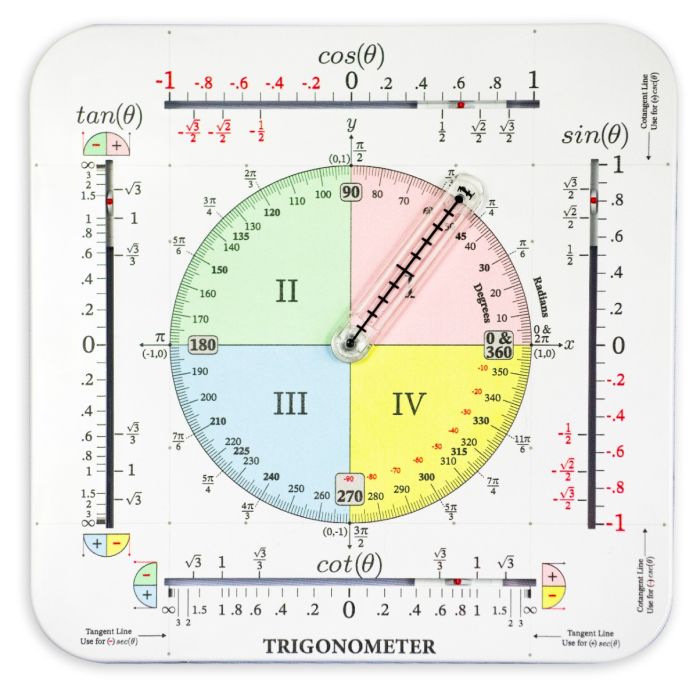
The Tool That Finally Makes Trig Click

The Tool That Finally Makes Trig Click 

By Brady Richter, Founder of Trigonometer LLC 

Ask almost any math teacher about trigonometry, and you’ll hear some version of the same story. Students can memorize trig formulas: SOH-CAH-TOA. They can pass a quiz on it. But come November, when the unit circle appears in its full glory (six trig ratios, four quadrants, radian measures, and a whole lot of special angles), something goes wrong. The formulas blur together. The signs flip in mysterious ways. And the student who felt confident in September is suddenly lost. 

That gap between memorization and understanding is exactly what the Trigonometer was designed to close. 

Read more

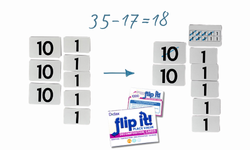
Making Place Value Visible

Making Place Value Visible 

By Nichole Fillman 

Helping students truly understand place value is more than just getting the right answer; it’s about seeing how numbers work. Without a strong foundation, even familiar operations can become confusing. Author Nichole Fillman explores how making place value more visible through structured, visual models can support deeper understanding and more confident problem-solving in elementary math. 

  • Common challenges students face when learning place value  
  • How visual, structured models support base-ten understanding and reduce cognitive load  
  • Classroom-ready strategies for composing, decomposing, and reasoning about numbers 

Read more

Data Discussions and Visualizations

Data Discussions and Visualizations 

Too often, data is pushed to the end of the year or not prioritized until the upper grades. However, when used intentionally in PK–5 classrooms, it becomes a powerful way to build mathematical thinking, fuel classroom conversations, and support students in seeing themselves as capable problem solvers. Through data discussions and visualizations, students begin to notice patterns, ask questions, and make sense of information in ways that feel both relevant and engaging. 

Read more

How the Rekenrek Supports Number Sense

What’s Red and White All Over? 

How the Rekenrek Supports Number Sense in Pre-K–Grade 5 

By Christine Hopkinson 

The rekenrek is a versatile math tool that is visual, tactile, and affordable. Its red-and-white bead structure makes number relationships easy to see and gives students a clear, visual way to think about quantity and place value. 

This post shares eight downloadable rekenrek mini-lessons for Pre-K through Grade 5 that teachers can use to support number sense in the classroom. Each lesson highlights a specific mathematical concept and shows how the structure of the rekenrek helps students see and reason about numbers. 

Read more

Didax Turns 50! Here’s What’s Coming in 2026

Didax Turns 50! Here’s What’s Coming in 2026 

This year is a big one: Didax is celebrating 50 years of active math learning, and we’re marking the milestone with new product launches, monthly giveaways, and in-person events all year long. 

Whether you’re a classroom teacher, homeschool educator, math coach, administrator, or parent, we’re grateful you’ve been part of the journey. Your support has allowed us to continue delivering the hands-on classroom staples you rely on while also creating new, innovative resources for math learning. We can’t wait to celebrate with you and show you what’s next. 

Read more

1 2 3 4 5 ... 8 Next Page