Using Unifix® Cubes to Support the Development of Number Sense
- By Neily Boyd
- Nov 20, 2019
Need new ideas? Looking for quick tips for teaching tricky concepts or organizing your math centers? Class Ideas is your go-to spot for inspiration, information and innovation and it’s an ideal way to stay current with the latest trends in math teaching and learning.
If there are topics you’d like us to cover or you’d be interested in being a guest contributor, reach out to us and we’ll respond. Email us at hello@didax.com
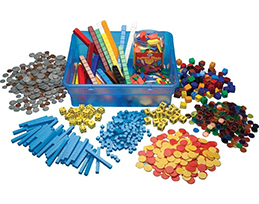
Teachers have long relied on manipulatives to introduce new math and literacy concepts and enhance learning. Manipulatives are useful at all grade levels, from kindergarten (think Unifix Cubes) through high school (think algebra tiles), with students of all abilities, including and especially those with special needs and learning differences.
Jumbo Unifix® Cubes, sandpaper letters and numerals, and Omnifix cubes are just a few of the go-to resources used in many SpEd classrooms throughout the country.
Watching my children and students work with manipulatives, I can see how hands-on experiences with math concepts help build a solid foundation for future learning. Often, teachers and students struggle with the transition from concrete manipulatives to a representation of the concept. Web- or app-based “virtual” manipulatives help to make this transition easier, although many teachers struggle to find a place for these tools in the classroom. Hands-on manipulatives are an excellent tool on their own, and they are even more powerful when coupled with virtual manipulatives. To support the use of these virtual tools, Didax has developed more than a dozen free virtual resources, available on our website. If you need some help getting started, read on for some ideas!
As the school year draws to a close, many teachers a thinking about packing up their classroom. Whether you’re staying in the same room and want things ready for the fall or moving to another grade or another school, keeping things neat and organized will help get the next year off to a good start.
Primary children are expected to learn to count, add/subtract, and solve simple word problems in mathematics. So why must a focus at this level also include measurement concepts and skills? Obviously, measurement is of great importance in our daily lives. Those who have worked with K-3 students know that measurement topics are not easy for many children to understand. Measurement must be a focus at the primary level because students need a wide variety of conceptual experiences to make sense of what they are learning; this emphasis prepares them for later work in mathematics.
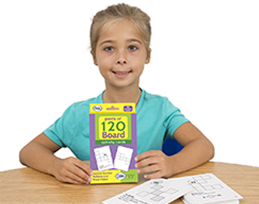
When I first started visiting elementary school classrooms, I noticed that almost all of them had a hundreds chart somewhere in the room. It might have been a pocket chart, or maybe a poster on the wall, but it was always there as an instructional tool. Then, about ten years ago, the mathematics community agreed that rather than stopping at 100, this chart should go to 120. This change would address students’ struggles with “turning the century,” helping them recognize that the number after 100 is 101 and that counting continues from there.
Helping students build an understanding of fraction concepts is a challenge in the intermediate and middle grades. The pictorial representation is a critical tool for making the connection between the concept and the procedure. Conceptual understanding occurs when students can explain why the procedure works, showing that they have assimilated or integrated this understanding into their basic knowledge of fractions.
© 2025 Didax, Inc. All Rights Reserved.